The Ultimate Guide to the House Edge
All casino games ever made carries a built-in mathematical advantage for the house. That advantage is neither a trick, a scam, or an indication that the game itself is rigged. It is simply the cost of gambling. Comprehending how the house advantage functions converts gambling from a random hope into a measured form of amusement. Gamblers who understand this idea can choose more wisely about which games to choose, how to control their funds, and when to walk away. The casino advantage is shown as a percentage that represents the mean gross profit the house expects to keep from each stake over the long run. A game having a 2% house advantage signifies that, in theory, for each 100 units bet, the establishment holds 2 and pays back 98 in payouts. This overview breaks down every layer of that apparently simple figure, demonstrating precisely how it is determined, how it changes across game types, and what a gambler can practically do about it.
The True Meaning of the House Edge
The house edge constitutes the numerical reflection of the casino’s inherent edge in any game of chance hahaspin.eu. It is not a deduction deducted from every bet, nor does it act as a guarantee that a player will lose exactly that percentage in a single session. Instead, it reflects the long-term expected outcome across millions of hands, spins, or rolls. If a slot machine has a 4 percent house edge, the theoretical return-to-player rate is 96 percent. Over a few dozen spins, a player might double their money or lose everything. Over a year of continuous play across thousands of customers, the machine will grind remarkably close to that 4 percent margin. This mathematical certainty is what allows casinos to operate as businesses rather than as charitable operations.
The crucial distinction lies between short-term variance and long-term expectation. Variance is the wild swing of luck that produces winning streaks and losing streaks in any given session. The house edge is the quiet, relentless gravity that pulls results back toward the casino’s favor over time. A roulette player betting on red faces a house edge of 2.70 percent on a single-zero wheel, but in ten spins, they could easily win seven times. After ten thousand spins, however, the actual return will hover very close to the mathematical prediction. Understanding this separation between immediate experience and underlying probability is the foundation of informed play. It explains why chasing losses is dangerous and why treating gambling as a paid entertainment expense makes far more sense than viewing it as an investment strategy.
Each game’s house edge is calculated by comparing the true odds of an event occurring against the payout odds the casino offers. True odds reflect the actual probability. If a bet has a 1 in 37 chance of winning, the true odds are 36 to 1. If the casino pays only 35 to 1, the shortfall creates the house edge. That single unit of difference, multiplied across thousands of wagers, builds the entire gaming industry. The house edge is therefore not a mysterious force but a simple arithmetic gap between what should be paid and what is actually paid. Smart players learn to identify which games have the narrowest gaps and which bets within those games offer the most favorable conditions.
Payment Methods, Settlement Periods, and the Actual Price of Play
The game margin is not the sole expense a player deals with. Banking channels come with their own fees, processing delays, and FX costs that can eat into a playing funds before a initial stake is placed. E-wallets like Skrill and Neteller generally offer the most rapid withdrawal times, often processing within 24 hours, but could impose small transaction fees. Bank transfers are slower, sometimes needing three to five business days, but normally carry no extra casino-side fees. Credit and debit cards fall in the middle, presenting broad acceptance and moderate processing speeds. Cryptocurrency options, where present, can deliver near-instant transfers with low network fees, though exchange rate volatility introduces a different kind of risk.
Players should factor these ancillary costs into their total assessment of the gambling experience. A casino that provides a 1 percent lower house edge on its blackjack tables but applies a 2 percent withdrawal fee and takes a week to handle payouts could be prone to higher costs in real terms than a competitor with somewhat worse game odds but free, fast cashouts. The total cost of play includes the house edge, bonus terms, payment friction, and the value of the player’s time spent waiting for funds. Hahaspin Casino offers a variety of widely used payment methods, and players should consult the banking page for the most up-to-date information on processing times and any relevant limits or fees before entrusting funds.
How the House Edge Is Calculated Across Different Game Types
Computing the house edge begins with listing every possible outcome of a wager and assigning each its exact probability. For a simple coin-flip game, the probability of heads is 50 percent. If a casino provided even-money payouts on that bet, the house edge would be zero. But if the casino paid 0.90 for a 1-unit wager on a correct call, the edge would be 5 percent. Real casino games feature far more outcomes. In European roulette, a straight-up bet on a single number has a 1 in 37 probability because of the single zero. The true odds are 36 to 1, but the payout is 35 to 1. The expected value calculation combines the probability of winning by the payout, includes the probability of losing multiplied by the loss, and shows the result as a percentage of the wager. The formula yields a house edge of 2.70 percent for that bet, and for nearly every other bet on the layout.
Slot machines operate on a essentially different calculation model. Instead of predetermined probabilities derived from physical wheels or cards, slots use random number generators coded with virtual reel mappings. A solitary spin can activate hundreds of thousands of feasible combinations, each allocated a particular probability. The game’s general return-to-player percentage is established by adding the products of every winning combination’s probability and its payout value. The house edge is simply 100 percent minus that RTP figure. Unlike table games where the player can determine the edge from apparent rules, slot RTP is defined by the game developer and confirmed by independent testing laboratories. Players commonly locate this information in the game’s help files or on the casino’s website, though precise figures may change by jurisdiction.
Card games like blackjack add a further layer of complexity because player decisions directly influence the house edge. The basic house edge in blackjack relies on the player follows perfect basic strategy for the specific rule set in use. Deviating from that strategy raises the effective house edge, sometimes dramatically. A player who consistently stands on 12 against a dealer’s 10 provides the house a much larger advantage than the typical 0.5 percent achievable with optimal play. Video poker functions similarly, with the pay table determining the theoretical return and player skill dictating how close they come to achieving it. This interactive dimension means that two players sitting at identical machines or tables can face radically different effective house edges based solely on their decision-making quality.
In what manner Bonuses and Promotions Correspond with the House Edge
Casino bonuses change the effective house edge by providing extra funds or spins to a player’s account, but they include conditions that must be considered in any mathematical assessment. A 100 percent deposit match bonus practically doubles the starting bankroll, which sounds like it should halve the house edge. However, wagering requirements assign a cost to that bonus. If a player must wager the bonus amount 35 times before withdrawing, the expected loss from playing through those requirements must be weighed against the bonus value. A bonus on a game with a 3 percent house edge played through 35 times results in an expected loss of 105 percent of the bonus amount, indicating the bonus actually carries a negative expected value despite appearing generous.
The key to assessing any bonus lies in recognizing the playthrough multiplier and the eligible games’ house edge. A bonus with a 25x wagering requirement played on a blackjack game with a 0.5 percent house edge produces an expected loss of only 12.5 percent of the bonus amount, providing substantial positive expected value. The same bonus played on slots with a 4 percent edge results in a 100 percent expected loss, erasing the bonus entirely. Many casinos, including Hahaspin Casino, use different game weightings toward wagering requirements, with table games often representing a smaller percentage than slots. Examining the full terms and conditions before claiming any promotion is not merely advisable; it is the only way to assess whether the offer genuinely improves the player’s position.
Free spins offers present a simpler calculation. Since the spins themselves cost nothing, any winnings they produce represent pure positive expected value, subject to whatever wagering requirements attach to those winnings. A batch of 50 free spins on a 96 percent RTP slot has an expected raw value of 50 times the spin value times 0.96. If winnings must be wagered 30 times on slots with a 4 percent house edge, the expected cost of meeting those requirements must be subtracted. The net result can still be positive, but the player should calculate it rather than assume free means cost-free. Promotions are marketing tools designed to attract deposits, but mathematically informed players can identify which offers genuinely shift the odds in their favor.
House Edge in Slot Machines
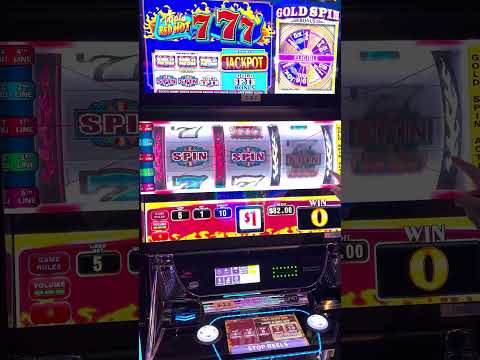
Slot machines function on a fundamentally different concept than table games when it involves the house edge. Instead of a single fixed figure that applies uniformly to all bets, each slot title has its own programmed return-to-player rate. These rates usually range from about 92 percent to 98 percent, meaning the house edge spans from 8 percent down to 2 percent. The exact RTP for a given game is established by the game studio during development and is built into the software. Regulatory bodies in reputable jurisdictions mandate that these figures be verified by independent testing agencies, guaranteeing that the actual performance matches the advertised rate over millions of spins.
Progressive jackpot games add an further wrinkle to the house edge calculation. A part of every wager feeds the progressive prize pool, which indicates the base game RTP is reduced than that of a comparable non-progressive slot. The general theoretical return contains the expected value of the jackpot contribution, but that value is merely realized by the individual player who finally hits the top prize. For the rest, the effective house edge during their session is higher because they are funding the jackpot without getting its benefit. Players chasing progressives should recognize that they are exchanging a higher base-game house edge for a minuscule chance at a life-changing sum. The trade-off is not good nor bad in strict terms, but it must be approached with clear eyes.
Volatility and Its Link to the House Edge
Volatility, also called variance, explains how a slot machine spreads its payouts over time and is separate from the house edge. Two slots can both have a 96 percent RTP, meaning a 4 percent house edge, yet play completely otherwise. A low-volatility game will deliver frequent small wins that hold the bankroll relatively steady, while a high-volatility game will provide long dry spells interrupted by occasional large payouts. The house edge remains identical in both cases, but the player experience and the bankroll necessary to withstand the variance differ greatly. Choosing the right volatility level for one’s budget and temperament is as important as reviewing the RTP percentage.
Players with smaller bankrolls who want extended play sessions should lean toward low and medium-volatility slots. The frequent smaller wins, even if they do not fully compensate for the house edge, decrease the rate of bankroll depletion and offer more entertainment time per unit wagered. High-volatility games require a larger cushion to survive the inevitable losing streaks and still be in the game when the big win arrives. Grasping this contrast avoids the common frustration of adding a modest amount, selecting a high-volatility game, and seeing the balance disappear in minutes. The house edge is a long-term average, but volatility dictates the shape of the journey toward that average.
Regulation, Security, and Fair Play Verification
The house edge numbers covered throughout this article take for granted that the games are fair and that the claimed odds match reality. That belief only holds when a casino operates under a legitimate gaming licence and subjects its games to independent testing. Reputable gaming authorities, such as the Malta Gaming Authority or the Curacao eGaming authority, mandate licensees to prove that their random number generators deliver truly arbitrary and unbiased results. These authorities insist on routine testing by accredited auditors like eCOGRA, iTech Labs, or GLI, which check that the actual payouts fall within numerically acceptable limits of the expected RTP.

Players may verify a casino’s regulatory status by navigating to the bottom of the website, where the licence number and granting body are typically presented. Tapping the regulatory logo should lead to a live confirmation page on the authority’s site. If the logo is only an image without a working hyperlink, that is a serious warning sign. Protection is a separate but equally critical concern. SSL security, signaled by the security image in the browser address bar, ensures that private and payment data exchanged between the player and the casino will not be compromised. Two-step verification, where provided, offers an further layer of account safeguarding. These security steps do not impact the casino advantage, but they decide whether the player will at any point have a chance to receive the payouts that the advantage enables.
House Edge in Table-Based Games
Table-based games generally present the most advantageous house edge percentages for gamblers ready to master basic strategy. Blackjack, when approached with advantageous rules and flawless basic strategy, can feature a house edge as small as 0.5 percent. That figure presupposes standard rules such as the dealer staying on soft 17, doubling after splitting permitted, and a 3-to-2 payoff on natural blackjacks. If the casino provides only 6-to-5 on blackjacks, the house edge rises by about 1.4 percent, converting one of the best wagers in the casino into a considerably worse proposition. Gamblers should always examine the felt or consult the dealer about blackjack payout rates before taking a seat. Rule variations on splitting, doubling, and surrender options also shift the edge, making it important to understand the specific table settings.
Baccarat offers one of the easiest house edge profiles in the casino. The banker bet carries a house edge of approximately 1.06 percent, while the player bet stands at 1.24 percent. The tie bet, despite its enticing 8-to-1 or 9-to-1 payout, carries a ruinous house edge above 14 percent and should be shunned entirely by anyone who is concerned about protecting their bankroll. The commission applied on winning banker bets, typically 5 percent, is what generates the edge on that wager. Without it, the banker bet would actually possess a small advantage over the house. Baccarat’s straightforward structure and low edge on the main bets have made it a preferred among high-stakes players who comprehend the mathematics.
Craps provides a dramatic spectrum of house edge values, spanning from the excellent to the catastrophic. The pass line and come bets, when backed with full odds, can cut the effective house edge to well under 1 percent. The odds bet itself carries a zero house edge, turning it the only truly fair wager in the casino. However, proposition bets in the center of the table can carry house edges exceeding 10 or even 16 percent. The “any seven” bet, for instance, returns 4 to 1 but has true odds of 5 to 1, producing a house edge of 16.67 percent. The lesson is clear: sticking to the basic line bets and using maximum odds is the mathematically sound strategy to craps.
Roulette Variants and Their Edge Differences
Roulette offers the most obvious demonstration of how a individual rule change can significantly alter the house edge. European roulette, with its single zero, holds a uniform house edge of 2.70 percent on all bets except one. The exception is the “en prison” or “la partage” rule found in some French roulette variants, which lowers the house edge on even-money bets to 1.35 percent by giving back half the wager when the ball lands on zero. American roulette, by introducing a double zero pocket, nearly doubles the house edge to 5.26 percent across most bets. The five-number bet covering 0, 00, 1, 2, and 3 holds an even worse edge of 7.89 percent, turning it one of the worst bets on any table game floor.
The real-world implication for players is straightforward: always choose single-zero wheels when they are available. The gap between a 2.70 percent and 5.26 percent house edge may appear small in percentage terms, but over time it indicates the American wheel uses up nearly twice as much of a player’s bankroll per hour of play. Many online platforms, including Hahaspin Casino, offer both European and American variants, and the game lobby usually displays the wheel type clearly. Choosing the European version is one of the simplest and most significant decisions a roulette player can make. The mathematics are unambiguous, and no amount of betting system or pattern recognition can beat the structural disadvantage of the extra zero pocket.
Playing on Mobile and the Stability of the House Edge
A common misunderstanding holds that mobile casino games carry a distinct house edge than their desktop versions. In a properly regulated environment, this is false. The random number generator and game logic exist on the casino’s server or within a certified game file that is identical no matter of the device used to access it. A slot with a 96 percent RTP on a desktop browser has the same 96 percent RTP when opened on a smartphone or tablet. The only variable that changes is the user interface, which is adjusted for touch controls and smaller screens. Game providers create their titles in HTML5, making sure that the underlying mathematics remain steady across all platforms.
What can differ on mobile is the player’s behavior and session length, which indirectly affects the observed variance. Mobile sessions tend to be shorter and more common, which means players may experience more extreme short-term results relative to their total wagering volume. A player who spins 50 times on a mobile device during a commute sees far more volatility relative to their expected loss than one who plays 500 spins in a desktop evening session. The house edge remains unchanged, but the perception of fairness can vary. Understanding that the mathematics are device-agnostic helps players avoid the false belief that changing platforms will change their luck. Hahaspin Casino’s mobile experience offers the same certified game library with full features, letting players to trust that the odds are the same wherever they choose to play.
Practical Strategies for Minimizing the House Edge
Lowering the effective house edge is not about beating the casino. It is about taking informed choices that decrease the rate of expected loss and extend playing time for a given bankroll. The single most influential decision a player can make is game selection. Selecting blackjack with favorable rules and learning basic strategy can lower the house edge to half a percent, while playing American roulette or high-edge side bets multiplies the expected loss rate by a factor of ten or more. The gap between a 0.5 percent and 5 percent house edge means that a player wagering 100 units per hour expects to lose 0.5 units versus 5 units per hour. Over a weekend of play, that gap builds into hundreds of units.
Money management constitutes the second pillar of edge-aware play. Establishing strict loss limits and session time limits hinders the house edge from having unlimited opportunities to work. The longer a player gambles, the more certain it becomes that their actual results will converge toward the negative expectation. Stepping away after a predetermined number of hands or spins, regardless of whether the session is winning or losing, restricts the total exposure to the edge. A disciplined player who sets aside 200 units for an evening and stops when that budget is exhausted, or when a target win is reached, places a ceiling on the house’s mathematical advantage that no amount of luck can breach from the casino’s side.
The third strategy focuses on leveraging the tools that reputable casinos provide. Deposit limits, reality checks, and self-exclusion options are not merely responsible gambling features; they are tactical instruments for controlling exposure to the house edge. Configuring a daily deposit limit prevents the emotional decision to chase losses with funds that were not part of the entertainment budget. Reality-check notifications that pop up after a set period of play prompt the player to assess whether they are still making rational decisions or simply feeding the edge out of inertia. These tools, combined with a clear understanding of the mathematics, turn the player from a passive participant into an active manager of their own risk.
- Choose games with the smallest published house edge: blackjack (0.5%), baccarat banker (1.06%), European roulette (2.70%)
- Steer clear of side bets and proposition wagers that carry double-digit house edges
- Learn and apply perfect basic strategy for skill-based games like blackjack and video poker
- Review the pay table and RTP of any slot before playing, choosing those above 96%
- Establish a strict loss limit and time limit for every session before the first wager is placed
- Review bonus terms completely, calculating the expected cost of wagering requirements against the bonus value
- Employ responsible gambling tools to maintain the limits you have set for yourself
FAQ
Can a player overcome the house edge through a betting system?
Not a single betting system can defeat a negative-expectation game over the long term. Strategies like the Martingale or Fibonacci modify the distribution of wins and losses, producing many small wins and rare catastrophic losses, but they don’t change the underlying mathematics. The house edge remains constant irrespective of how bets are sized or sequenced. Over a large sample, the total amount wagered multiplied by the house edge will equal the expected loss, regardless of what progression was used. Betting systems are entertaining and could produce short-term winning streaks, but they give no mathematical advantage.
Does the house edge imply the casino always wins?
The house edge guarantees that the casino profits collectively over millions of wagers, but it tells nothing about any individual session. A single player is able to absolutely win on any given day, and many do. The edge is a long-run statistical expectation, not a short-term certainty. Variance guarantees that results fluctuate wildly around the expected value. The casino’s business model relies on volume: serving thousands of customers makes sure that the few who win big are more than offset by the many who lose small amounts, permitting the house edge to manifest as reliable profit over time.
How can a player discover the house edge for a specific slot game?
The RTP for many online slot machines is published in the game’s info or help menu, usually accessible through a settings button within the game layout. The house advantage is just 100 percent minus the RTP. In case the help file does not present this detail, the casino site or the developer’s official site may provide it. In some regulated markets, operators are obligated to present RTP numbers visibly. Players who cannot locate the number can reach out to support staff, though not all support teams have direct access to this information for every title.
Is the house edge the same in live table games as in traditional virtual table games?
Live table games generally carry the same house edge as their digital equivalents when the rules are the same. A live single-zero roulette wheel with a single zero has the same 2.70% casino edge as an virtual European roulette game. Nevertheless, live dealer games sometimes use somewhat different rules. As an illustration, certain live blackjack tables use CSMs or offer 6-to-5 payouts for blackjacks, which increases the house edge. Users should always check the particular rules displayed in the live casino lobby, as the social and immersive format does not alter the mathematics but the rule differences might.